Search for articles:
Jia-Min Shao , Xin Zhang, Li-Ying Cui
Corresponding authors:
Received: 2018-04-18
Revised: 2018-08-4
Online: 2019-01-10
Copyright: 2019 Editorial board of Acta Metallurgica Sinica(English Letters) Copyright reserved, Editorial board of Acta Metallurgica Sinica(English Letters)
More
Abstract
The effect of lead on the initial corrosion behavior of 316LN stainless steel has been investigated by U-bend immersion experiments in 4 wt% NaOH solutions at 300 °C. Follow-up studies after soaking were carried out by scanning electron microscope, energy dispersive X-ray spectrometer, X-ray photoelectron spectrometer, Auger electron spectroscopy and Raman spectroscopy. The results show that lead affects the properties of the oxide film by changing the thickness and composition, which leads to an increase in the sensitivity of stress corrosion cracking of 316LN stainless steel. Pits and cracks appeared on the surface of 316LN stainless steel under both lead-free and lead-containing conditions. The corrosion products were oxides of Fe, Cr and Ni, and the main spinel structure on the surface of the film was NiCr2O4 under both conditions. However, in the presence of lead, the cracks and pits were more obvious, the thickness of the film increased from 50 to 200 nm, and the amount of protective NiCr2O4 decreased. Lead was concluded to be involved in the dehydration reactions in the form of Pb(OH)2, which affected the normal dehydration process of the hydroxides and inhibited the formation of spinel structures. Because of the above characteristics of lead, the stability of the oxide film and its protection of 316LN stainless steel were reduced.
Keywords:
Austenitic stainless steels (SSs) are widely used in the nuclear power field due to their excellent corrosion resistance in high-temperature water environments [1, 2, 3, 4]. However, stress corrosion cracking (SCC), which accelerates the failure during the service of the steels, is one of the most important problems [3, 5, 6]. SO42-, Cl-, Pb2+ and other impurity ions can enter the loop water system through a variety of ways, resulting in an abnormal water chemical environment, which leads to SCC failure of the nuclear power materials [2, 4, 7, 8, 9, 10, 11, 12, 13, 14]. Lead is known to be one of the most deleterious species in reactor coolants that causes SCC of alloys. Lead-induced stress corrosion cracking (PbSCC) can occur even for a local lead concentration as low as 1 ppm [15, 16].
Studies show that lead affects the SCC sensitivity of the materials by affecting the properties of the oxide film at high-temperature lead-containing solutions. The oxide film formed on the surface of austenitic stainless steels or nickel-based alloys in high-temperature and high-pressure water environments has a double-layer structure with an inner layer of Cr-rich oxide and an outer layer of Ni-Fe-rich oxide [17, 18, 19, 20, 21, 22, 23, 24]. However, the presence of lead may deteriorate the mechanical properties of the oxide film, promote the formation of M-OH and M-(OH)2, and retard the dehydration of the hydroxide in the passivation film [14, 19, 25, 26]. The effect of lead is strongly related to the pH of environment, and some experiments have shown that PbSCC is more likely to occur in alkaline environments [10, 14].
Research on PbSCC of nuclear power materials is mainly focused on steam generator (SG) materials such as alloys 690, 600 and 800 [14, 15, 16, 17, 25]. While, during long-term operation, lead can enter the circuit water system through various ways such as make-up water, chemical maintenance, seal welding, turbine start-up, surface dissolution on the secondary circuit side and pollution during stop of operation [22, 27, 28]. 316LN stainless steel, the main pipe material connecting the steam generator and the main coolant pump in each circuit, will inevitably be affected by impurity lead ions. So it is necessary to study the PbSCC behavior of 316LN stainless steel to assess the safety and integrity of nuclear power plants. The aim of this paper is to provide data for subsequent studies of austenitic stainless steel under high-temperature PbSCC by studying the PbSCC behavior of 316LN stainless steel in high-temperature alkaline solutions containing lead and lead-free.
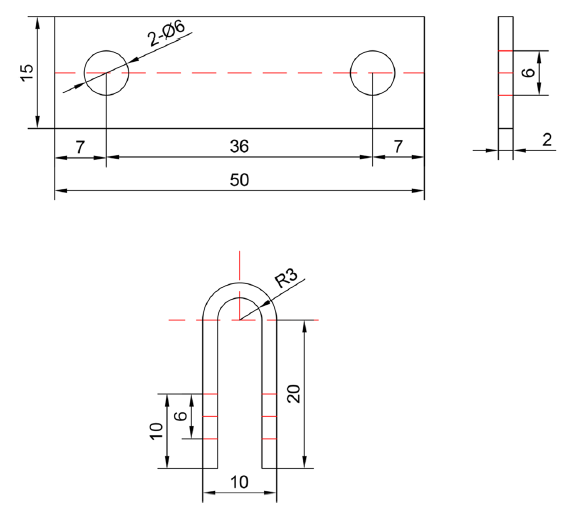
The material used in this test was 316LN stainless steel provided by a nuclear material manufacturer. The chemical compositions are shown in Table 1. The sample was processed into 10 mm × 10 mm × 2 mm block specimens and 50 mm × 15 mm × 2 mm U-bend specimens by wire-electrode cutting with the large surface parallel to the forging surface of the material.
Table 1 Chemical compositions of 316LN stainless steel (wt%)
| Alloy | C | Mn | Si | P | S | Cr | Ni | Mo | N | Cu | Co | Fe |
|---|---|---|---|---|---|---|---|---|---|---|---|---|
| 316LN SS | 0.041 | 1.41 | 0.4 | 0.011 | 0.0035 | 16.6 | 12.7 | 2.12 | 0.14 | 0.046 | ≤ 0.05 | Balance |
Stress corrosion cracking tests were carried out through U-bend immersion experiments. U-bend specimens were prepared according to ASTM G30, as shown in Fig. 1. The tested surface (outer surface) was polished to 2000-grit SiC sandpaper, whereas the remaining surfaces were polished to 800-grit paper. The specimens were then bent to 150° with a U-shaped prototype and then further bent to 180° by 316L stainless steel bolt. Finally, the specimens were rinsed with acetone, deionized water and alcohol, dried and stored in a vacuum dryer.
Fig. 1 Dimensions of the U-bend specimen
The U-bend immersion test was carried out in a 10 L autoclave made of Hastelloy. The compositions of the experimental solutions are shown in Table 2, and the reagents used are of analytical grade. The immersion test was carried out at a temperature of 300 °C at 10 MPa for a soaking time of 720 h and three parallel specimens were set for each condition.
Table 2 The compositions of the experimental solutions
| Serial number | Solution type | NaOH (wt%) | Pb (ppm) |
|---|---|---|---|
| 1 | NaOH | 4 | - |
| 2 | NaOH + PbO | 4 | 1000 |
In addition, the dissolved oxygen (DO) concentration was controlled below 0.2 ppm by high-purity nitrogen to simulate the amount of DO in PWR [17, 29, 30, 31].
High-purity nitrogen was bubbled through the test solutions for 1 h to deoxygenate them; after the solutions were loaded into the autoclave, nitrogen was flowed through the autoclave at a high rate for 15 min to replace the oxygen, and then 5 MPa of nitrogen was introduced and then released after 5 min. This process was repeated twice, and for the third time, the initial 5 MPa pressure of nitrogen was reduced to 1 MPa in 5 min, after which the charge valve was closed and the deflation valve opened until temperature rose to 104 °C to release the condensed gas. The deflation valve was then turned off, and nitrogen was added to a total pressure 10 MPa after the temperature reached 300 °C. Record of the soaking time then began.
The structure of 316LN was characterized by EBSD. The surface was polished to 5000-grit SiC sandpaper followed electropolishing until the surface was bright without any scratches. Electropolishing was then carried out in a 20 vol% perchloric acid and 80 vol% acetic acid solution at a DC of 25 V and 1A for 20-25 s at room temperature. EBSD observation was performed by an FEI QUANTA 250 SEM equipped with an electron backscatter diffraction instrument with an electron beam angle of 70° and the scanning step was 4 μm. OIM Analysis software was used to analyze the data obtained. The surface morphology of the oxide film and the matrix after removal of the film were studied using the FEI QUANTA 250 SEM. The components of the derusting solution were 100 mL HCl, 100 mL H2O and 1.6 g aminoform. The compositions of the oxide film were analyzed by energy dispersive X-ray spectrometer (EDX), Raman spectrometer and X-ray photoelectron spectrometer. The laser wavelength of the Raman spectrometer was 532 nm, the scanning wavelength range was 100-2000 cm-1, and the laser output power was 50%. The value of C 1s (284.8 eV) was used to correct the peak shifts of the alloying elements and oxygen in the X-ray photoelectron spectrometer (XPS) data, and curve fitting was performed with the commercial software XPSPEAK41. Auger electron spectroscopy (AES) tests were performed on a PHI-700 instrument equipped with a coaxial electron gun and a cylindrical mirror analyzer. The elemental depth profile was determined by sequential AES surface analysis and ion sputter etching using a 5.0 keV argon ion flux, and the energy resolution was 0.1%. The electron incidence angle with respect to the normal average surface plain was 30°. The sputtering rate, as determined on a thermally oxidized SiO2/Si standard, was about 17 nm/min.
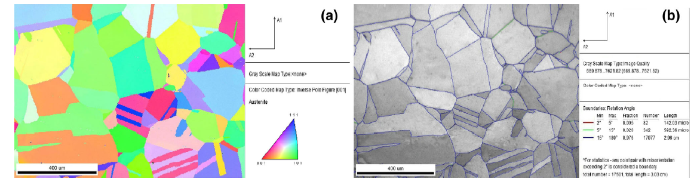
Figure 2 shows the microstructure of the material determined by electron backscattered diffraction (EBSD). The maps show that the 316LN stainless steel used in this work is a single-phase austenite structure with a large number of annealing twins and the average grain size is 177 μm.
Fig. 2 EBSD results of 316LN stainless steel
U-bend specimens after immersion were managed by wire-electrode cutting. The non-arcing parts were used to analyze the morphology and compositions of corrosion products and the arcing top parts were used to study the initial SCC behaviors after removing corrosion products.
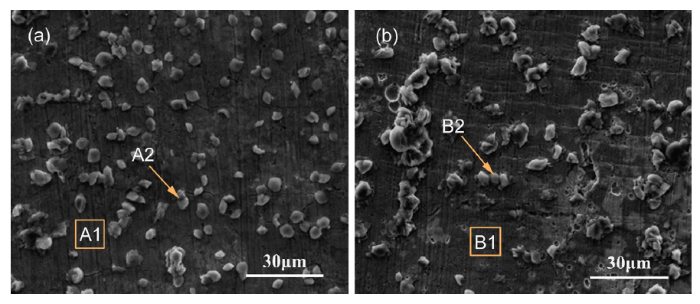
Figure 3 shows scanning electron microscope (SEM) micrographs of the surface morphologies of non-arcing parts after soaking for 720 h in lead-containing and lead-free solutions. There are two kinds of corrosion products—particulates and a relatively dense film. Small cracks can be observed on the film in both solutions, while they are more obvious in lead-containing solution. In order to observe the corrosion conditions of the 316LN stainless steel under the film, the corrosion products were removed from the samples surface.
Fig. 3 SEM images of 316LN stainless steel specimens soaked in a 4% NaOH, b 4% NaOH + PbO for 720 h at 300 °C
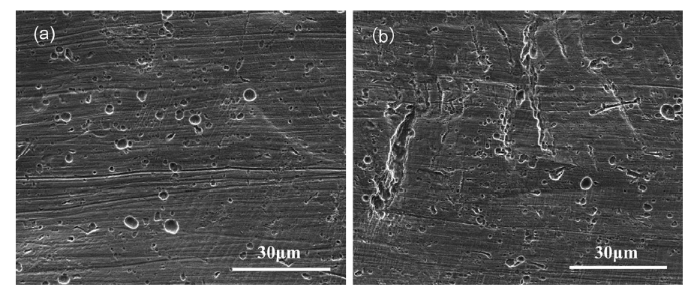
Figure 4 is the surface micrographs of the arcing parts after removing corrosion products soaked for 720 h in lead-containing and lead-free solutions. It can be seen that pits appeared on the surface of the samples under both conditions, while in lead-containing environment, the cracks are obvious and some are connected to the pits. This phenomenon indicates that 316LN stainless steel is highly sensitive to stress corrosion in a high-temperature alkaline environment and the pits are the primary sites to initiate SCC on steels [32, 33]. However, the presence of lead resulted in deterioration of the passive film formed in the alkaline solution and increased the sensitivity of 316LN stainless steel to SCC.
Fig. 4 SEM images after removal of the corrosion products from the 316LN stainless steel specimens soaked in a NaOH, b NaOH + PbO for 720 h at 300 °C
EDX was used to analyze the major elements of the films and their rough ranges in the areas marked in Fig. 3 and the results are shown in Table 3. It can be seen that the corrosion products are oxides of iron, chromium and nickel, and the contents of Ni, Cr and Fe are lower in the particulates than in the dense films. This difference is particularly pronounced in lead-containing condition. The reduction in the Ni, Cr and Fe contents may change the composition of the oxide film, damage the local compactness and stability of the passive film, and increase the likelihood of pitting and stress corrosion cracking under lead-containing condition.
Table 3 EDX results of the regions marked in
| Elements | A1 | A2 | B1 | B2 |
|---|---|---|---|---|
| C | 1.68 | 5.28 | 3.01 | 6.43 |
| O | 2.10 | 16.88 | 5.55 | 44.08 |
| Cr | 17.68 | 13.03 | 17.28 | 5.70 |
| Fe | 64.79 | 55.07 | 62.08 | 40.43 |
| Ni | 13.75 | 9.76 | 12.07 | - |
| Pb | - | - | - | 3.35 |
According to the potential-pH diagram of the Ni-Cr-Fe-H2O system at 300 °C, the compositions of Cr2O3 and spinel oxides, which play a main role in slowing the dissolution of the passive film and reducing the corrosion rate, are stable in the corrosion products under the lead-free experimental environment [13, 22, 34]. To understand the valence and phase structure of the major elements of 316LN stainless steel under the two conditions, the corrosion products were analyzed by XPS and Raman spectra, respectively.
Figure 5 shows the XPS spectral of the corrosion products under the two conditions, in which a(1,2), b(1,2), c(1,2) and d(1,2) correspond to the peaks of Cr 2p3/2, Fe 2p3/2, Ni 2p3/2 and O 1s, respectively [35, 36, 37]. The spectra in Fig. 5a1 show three peaks that correspond to electron binding energy of 576.4 eV, 577.3 eV and 578.4 eV, which indicate that chromium exists in a form of Cr2O3 or NiCr2O4 (a spinel structure that has similar electron binding energy to Cr2O3), Cr(OH)3 and CrO3 in the lead-free condition. However, the electron binding energies of the two peaks shown in Fig. 5a2 correspond to 576.5 eV and 577.1 eV. It can be seen that Cr(OH)3 is the main form, and the contents of Cr2O3 or NiCr2O4 and CrO3 are low in the lead-containing condition. The spectra in Fig. 5b1, b2 both show one peak, which correspond to electron binding energies of 711.4 eV and 711.0 eV, respectively. The observation of a single peak indicates that iron predominantly exists in a form of Fe2O3 under both conditions. Figure 5c1 shows one peak corresponding to electron binding energy of 855.5 eV, which indicates that nickel exists in a form of Ni(OH)2 or NiFe2O4 in the lead-free condition. Meanwhile, no obvious peak in Fig. 5c2 reveals that the content of Ni is low in the lead-containing condition which is consistent with Table 3. Figure 5d1, d2 both exhibit a single peak corresponding to electron binding energies of 531.7 eV and 531.8 eV, respectively, indicating that the oxygen exists mainly in a form of OH- under the two conditions.
Fig. 5 XPS spectra of a1,2 Cr 2p3/2, b1,2 Fe 2p3/2, c1,2 Ni 2p3/2, d1,2 O 1s of the oxide films on the 316LN stainless steel samples after soaking under different conditions for 720 h at 300 °C. The numbers 1 and 2 correspond to 4% NaOH and 4% NaOH + PbO solutions, respectively
The semi-quantitative analysis of the spectra displayed in Fig. 5 was carried out by XPSPEAK41 software. The contents of Cr(OH)3 and Cr2O3 (NiCr2O4) are 43.57 wt% and 17.73 wt%, respectively, in lead-free condition. In lead-containing condition, the content of Cr(OH)3 is 96.84 wt% and that of Cr2O3 or NiCr2O4, which has a protective effect on matrix, is only 3.16 wt%.
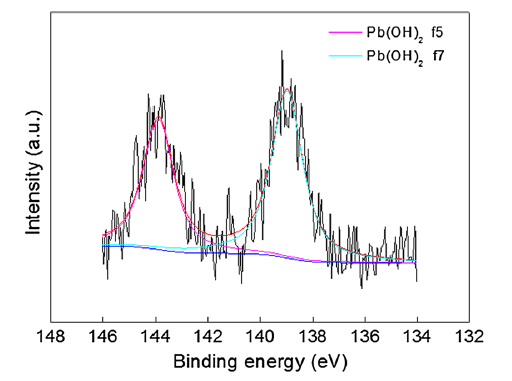
Figure 6 shows the Pb 4f XPS spectra of the sample from the lead-containing solution. The two peaks with electron binding energies of 138.9 eV and 143.9 eV correspond to Pb(OH)2 (f5) and Pb(OH)2 (f7) or PbO. However, in combination with the XPS spectra of O 1s, it can be confirmed that these two peaks correspond to Pb(OH)2 (f5) and Pb(OH)2 (f7), respectively, caused by the splitting of Pb 4f.
Fig. 6 XPS spectra of Pb 4f in the oxide film of the 316LN stainless steel sample after soaking in the 4% NaOH + PbO solution for 720 h at 300 °C
This result indicates that lead is mainly present in a form of hydroxide in the film and may participate in the normal dehydration of the Ni and Cr hydroxides, thereby affecting the composition of the passive film [14, 15, 25].
The results of XPS displayed above and the distribution of elements provided in Table 3 show that lead can obviously affect the distribution of Cr and Ni in the corrosion products and the forms of their compounds in addition to hindering the diffusion of Cr and Ni. These functions result in the transformation of the corrosion product from Cr2O3 or NiCr2O4 to Cr(OH)3 and Ni(OH)2 structures, which have poor abilities to protect the matrix.
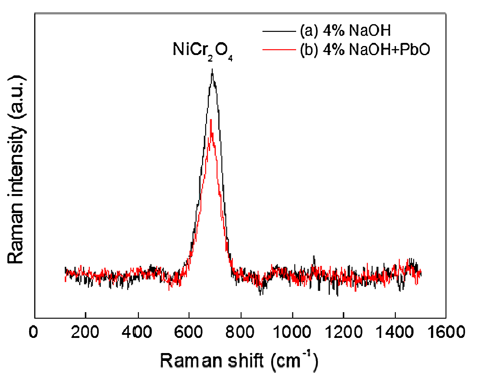
As indicated by the results of XPS, some substances, such as Cr2O3 and NiCr2O4, Ni(OH)2 and NiFe2O4, cannot be distinguished due to the similarities in their electron binding energies. To further determine the composition of the film, Raman spectroscopy analysis was performed. A strong peak at 684 cm-1 can be observed on the Raman spectra in both solutions, which corresponds to the strong characteristic peak of NiCr2O4 [31, 38, 39, 40, 41], as shown in Fig. 7. However, in the presence of lead, the peak intensity of NiCr2O4 is obviously lower than the lead-free conditions. These results show that the main component of the spinel structure in the film of 316LN stainless steel is NiCr2O4, but the presence of lead can destroy the conversion equilibrium and inhibit the formation of the oxide and spinel structures of Ni and Cr.
Fig. 7 Raman spectra of the oxide films on the 316LN stainless steel samples soaked in a 4% NaOH, b 4% NaOH + PbO solutions for 720 h at 300 °C
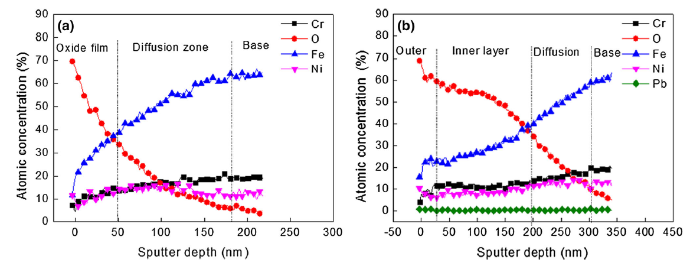
To investigate the influence of lead on the thickness of the oxide film and the distribution of the alloying agents under the two conditions, surface and depth profile AES analyses were carried out, and the results are shown in Figs. 8 and 9. The thickness of the film is defined as the depth at which the oxygen content is reduced to half the maximum [42, 43, 44].
Fig. 8 AES surface analysis of the oxide films on the 316LN stainless steel samples soaked in a 4% NaOH, b 4% NaOH + PbO solutions for 720 h at 300 °C
Fig. 9 AES depth profile analysis of the oxide films on the 316LN stainless steel samples soaked in a 4% NaOH, b 4% NaOH + PbO solutions for 720 h at 300 °C
As illustrated in Fig. 8, the oxide film formed in the lead-containing environment contains a small amount of lead, and there is no obvious distribution of Cr and Ni on the surface, which is consistent with the results shown in Figs. 5 and 6. Compared Fig. 9a with b, there are significant differences in the thickness of the oxide film and the depth distribution of the main elements between the two conditions. According to the tendencies of Ni, Cr and Fe, we defined the oxide film into the inner and outer film. In outer film, the contents of Fe and Cr increased and that of Ni decreased slightly, while the contents of the three elements were relatively stable in inner film [4, 45, 46, 47, 48]. Overall, the outer layer of the film is rich in Fe-Ni and the inner layer is rich in Cr, which are related to the diffusion rate of the elements in the oxide [18, 19]. However, the film generated in the lead-free environment is approximately 50 nm thick, and there is no obvious double-layer structure, while the film from the lead-containing environment is approximately 200 nm thick with a double-layer structure. The outer layer is similar to the surface structure formed in the lead-free condition, and the contents of Fe and Cr in the inner layer are equivalent to those in lead-free condition, which are around 20-40% and 12%, respectively. However, the Ni content dropped from 12 to 8%.
Moreover, as shown in Fig. 9b, the content of lead remains nearly constant at a low value with the increase of depth, which indicates that a small amount of lead can affect the composition of Cr and Ni compounds and affect the diffusion of Ni. According to the results displayed in Figs. 5, 6 and 7, lead inhibits the formation of the spinel structures of Cr and Ni, resulting in a higher content of the loosely structure Cr(OH)3 in the film. In summary, the adsorption of lead reduces the protective properties from the film and increases the susceptibility of local corrosion, which provide a basis for further studies on the PbSCC mechanism of austenitic stainless steel [47, 48, 49, 50].
The results of the EDX, XPS and AES analysis show that in high-temperature lead-containing solution, the thickness of the oxide film on 316LN stainless steel is significantly increased, and the contents of Fe, Cr and Ni are reduced, and Cr and Ni exist mainly in the form of hydroxides comparing with lead-free condition. The presence of the hydroxide decreases the stability of the film, increases the corrosion sensitivity and reduces the ratio of Cr2O3 to spinel oxide, which have protective effects on the matrix [13, 14].
According to the XPS results and studies on PbSCC of nickel-based alloys, it is believed that lead is mainly involved in dehydration reactions in the form of Pb(OH)2, which affects the normal dehydration process (Reactions 1-4) and inhibits the formation of spinel structures (Reaction 5), resulting in a higher content of hydroxides, which are consistent with the results of Raman and XPS analyses [14, 15, 25]. There are reactions of 1-5 as follows.
4Fe(OH)2+O2→2Fe2O3+4H2O, (1)
2Fe(OH)3→Fe2O3+3H2O, (2)
2Cr(OH)3→Cr2O3+3H2O, (3)
Ni(OH)2→NiO+H2O, (4)
(Ni,Fe)(OH)2+2(Cr,Fe)(OH)3→(Ni,Fe)(Cr,Fe)2O4(spinelstructures)+4H2O. (5)
Moreover, lead can affect the formation of spinel oxides and even change their structures by participating in the process of film formation [15, 44, 51, 52]. The relevant reactions are shown in (6)-(9).
PbO+H2O→Pb(OH)2, (6)
(OH)Ni-O-Pb-O-Cr(OH)2+2H2O→Pb(OH)2⋅Ni(OH)2⋅Cr(OH)3, (7)
(OH)Fe-O-Pb-O-Cr(OH)2+2H2O→Pb(OH)2⋅Fe(OH)2⋅Cr(OH)3, (8)
(OH)Ni-O-Pb-O-Fe(OH)2+2H2O→Pb(OH)2⋅Ni(OH)2⋅Fe(OH)3. (9)
Due to the above characteristics, even a very low lead content evenly distributed in the oxide film (Figs. 6, 8, 9) is sufficient to affect the forms of the Cr and Ni compounds and promote the formation of loose hydroxide structures of Cr and Ni (Fig. 5), thereby suppressing the formation of spinel structures of Cr and Ni (Fig. 7). These effects reduce the protection of the oxide film under lead-containing condition, which results in an increase in the defect density and the migration of defect pairs [31, 34, 51, 52].
According to the point defect model (PDM) of the passive film, a cation vacancy is generated at the interface between the film and solution and consumed at the interface between the metal and the film along with the generation of a variety of Schottky defects (Reactions 10, 11) during the continuous formation of the passivation film, while the generation and consumption of oxygen vacancies occur in reverse. The adsorption of Pb2+ can combine with the extra cation vacancy defects at the film/solution interface through Reactions 12 and 13, which will stimulate the system to continue to generate Schottky defect pairs to maintain electrical equilibrium. In other words, the adsorption of lead promotes the formation and desorption of Fe, Cr and Ni hydroxides and increases the concentration of oxygen vacancies. This increased concentration facilitates the diffusion of oxygen through the film, which in turn accelerates the corrosion of the metal/film in the regions of the defect diffusion channels (i.e., active positions), eventually enhancing the growth rate of localized corrosion (Fig. 9b) [51, 52, 53, 54].
At the same time, owing to the enhanced formation of Schottky defect pairs, the defect pairs continuously migrate to the film/solution interface from the lattice position. This migration of defect pairs makes it easier for cations to migrate to the solution interface and form hydroxides, resulting in a larger thickness of the film under lead-containing condition, which is consistent with the AES results in this work and relevant literatures [31, 44]. Therefore, there are reactions of 10-13 as follows.
Null→$V_{M}^{′′}$+ $V_{O}^{..}$, (10)
Null→$V_{M}^{′′′}$V′′′M+3 $V_{O}^{..}$, (11)
Pb2++$V_{M}^{′′}$→PbM,M(Ni,FeII), (12)
Pb2++$V_{M}^{′′′}$→$Pb_{M}^{′}$,M(Cr,FeIII). (13)
Based on the above process, the loss of metal and the process of cation diffusion on the film/metal interface are promoted under lead-containing condition compared to lead-free condition, which results in an increase in the initiation density and growth rates of pits and cracks in 316LN stainless steel under tensile stress.
In high-temperature alkaline solutions, lead can be adsorbed on the oxide film in the form of Pb(OH)2, which participates in the normal dehydration process of the hydroxides and inhibits the formation of spinel structures.
The adsorption of lead reduces the stability and protection of the oxide film which makes 316LN stainless steel more susceptible to pittings and stress corrosion cracking. This work provides a foundation for subsequent studies on the mechanism of pitting and SCC of austenitic stainless steel in high-temperature lead-containing environments.
This work was supported by the National Basic Research Program of China (973 Program Project No. 2014CB643300) and the Chinese National Natural Science Foundation (Nos. U1260201 and 51471034).
Conflict of interest The authors confirm that this article content has no conflict of interest.

 WeChat
/
| 〈 |
|
〉 |