Acta Metallurgica Sinica(English Letters), 2017, 33(5): 444-451
doi: 10.1016/j.jmst.2016.06.018
Morphology-Controlled Synthesis of CeO Microstructures and Their Room Temperature Ferromagnetism
Fanming Meng1,2,*,, Zhenghua Fan1, Cheng Zhang1, Youdi Hu1, Tao Guan1, Aixia Li1

Abstract:

Gear-shape CeO2 microstructures have been synthesized via a facile hydrothermal method with Ce(NO3)3⋅6H2O as the cerium source, NH4HCO3 as both the precipitator and the carbon source, and cetyltrimethyl ammonium bromide (CTAB) as the surfactant. X-ray diffraction (XRD) inferred that the synthesized CeO2 microstructures exhibited a fluorite structure. The band gap (Eg) of CeO2 samples is larger than that of bulk. X-ray photoelectron spectroscopy (XPS) showed that there are plenty of Ce3+ ions and oxygen vacancies at the surface of CeO2 samples. All the synthesized CeO2 samples exhibited the room temperature ferromagnetism, and the saturation magnetization increases with the increases of lattice parameter and Eg. The room temperature ferromagnetism mechanism of gear-shape CeO2 is mainly attributed to the influence Ce3+ ions.

Key words: Ceria; Controlled synthesis; Ferromagnetism; Hydrothermal method; Nanomaterials;
1. Introduction

Shape-selective synthesis of inorganic nanomaterials is of scientific and technological importance due to their unique shape-dependent material properties and promising applications in catalysis, optics, microelectronics, and magnetic devices[1,2,3,4,5]. So far, a number of precipitants including sodium hydroxide, ammonium hydroxide, hydrazine hydrate, urea, and ammonium hydrogen carbonate have been used to synthesis such shape-controlled nanomaterials. For example, Mai et al.[6] reported that single-crystalline nanopolyhedra, nanorods, and nanocubes of CeO2 were selectively prepared by a hydrothermal method using sodium hydroxide as precipitants. Wei et al.[7] reported that urchin-like CeO2 hierarchical structures were prepared using ammonia solution as precipitant, while coral-like CeO2 hierarchical structures were prepared using ammonium hydrogen carbonate as precipitant. Lu et al.[8] reported that CeO2 nanoparticles were synthesized by a novel hydrothermal synthesis process using hydrazine hydrate as mineralizer. Wu et al.[9] reported that fractal dendrites have been successfully obtained via trisodium phosphate, ammonium hydroxide, and urea as precipitant. Meng et al.[10] reported that monocrystalline CeO2 tablet-like nanostructures and triangular prism-like nanotubes were synthesized by a simple template-free hydrothermal method using urea as precipitant. It still remains a significant challenge to synthesize CeO2 crystallites using novel precipitants. Ammonium hydrogen carbonate could be hydrolyzed to produce ammonium and bicarbonate ions, but its involvement as a precipitant in preparing nanomaterials was seldom reported.

Ceria (CeO2), an important rare earth compound, has been widely used in various fields due to its oxygen storage capacity[11,12], catalytic[1,13], optical[14,15], and magnetic properties[5,16]. CeO2 nanomaterials have exhibited unique physical and chemical properties which are significantly different from their bulk counterparts. Therefore, nano-CeO2 materials have attracted much attention recently. Various synthetic methods including microemulsion[17,18], Sol-gel[19,20], sonochemical[21,22], electrochemical[23,24], solvothermal[7,25], and hydrothermal synthesis[9,16] have been applied to synthesizes CeO2 nanostructures. Among all these synthetic methods, the hydrothermal approach has shown its extraordinary ability in structural control of CeO2 nanostructures. It has produced various morphologies of CeO2. Lu et al.[26] obtained nanopolyhedra and square-like CeO2 using Ce(NO3)3⋅6H2O as cerium resource and N2H4⋅H2O as mineralizer. Meng et al.[27] synthesized CeO2 nanopoles using CeCl3⋅7H2O as cerium resource, NaOH as mineralizer, and ethylenediamine as complexant. Zhou et al.[28] obtained nanotubes using Ce2(SO4)3⋅9H2O as cerium resource, NaOH as mineralizer. Li et al.[29] synthesized CeO2 nanosheets using Ce(NO3)3⋅6H2O as cerium resource, urea as both precipitator and carbon source. Sun et al.[30] synthesized flower-like CeO2 microspheres using Ce(NO3)3⋅6H2O as cerium resource and NH3⋅H2O as mineralizer. A hydrothermal process is simple, cost-effective, and environmentally friendly. It has become an important method for preparation of CeO2 nanostructures.

In this paper[31], we report a morphology-selective synthesis method of gear-like CeO2 microstructures and their magnetic properties. Here, we further report on hydrothermal growth mechanism of gear-shape CeO2 microstructures and their room temperature ferromagnetism. The structure and properties were characterized by various techniques, including X-ray diffraction (XRD), scanning electron microscopy (SEM), UV-vis absorption spectroscopy, Raman spectra, and vibrating sample magnetometer (VSM). Interestingly, the saturation magnetization (Ms) of the synthesized gear-shape CeO2 microstructure is significantly affected by the lattice parameter and the band gap (Eg). The possible mechanism is discussed in terms of the presence of Ce3+ ions in the nanostructures.

2. Experimental

The growth of sample was performed dissolving 4 mmol cetyltrimethyl ammonium bromide and 40 mmol NH4HCO3 in 20 mL distilled water under vigorous stirring, followed by respectively dissolving 2 mmol, 4 mmol, 6 mmol, 8 mmol Ce(NO3)3⋅6H2O in 20 mL distilled water under vigorous stirring. And then, 20 mL Ce(NO3)3⋅6H2O aqueous solution with different concentrations was put to 20 mL cetyltrimethyl ammonium bromide and NH4HCO3 aqueous solution under continuous stirring. And then obtained solution was put into a 50 mL Teflon-lined autoclave and heated for 12 h at 180 °C. After being cooled to room temperature, the precipitate was collected with centrifugation, washed for three times using distilled water and ethanol, followed by drying in air for 10 h at 80 °C. CeO2 was prepared by calcinating for 5 h at 400 °C.

The X-ray diffractometer (XD-3) with Cu radiation (λ = 0.1506 nm) was used to measure the crystalline phase of CeO2 microstructures. The morphology was characterized using scanning electron microscope (S-4800). The chemical states were studied using XPS (ESCALAB 250 US Thermo Electron Co). The Raman spectrum was analyzed using a Raman spectrometer system (inVia-Reflex) by an excitation laser of 532 nm at room temperature. The ultraviolet-visible-near infrared spectrophotometer (U-4100) was used to measure UV-Vis absorption spectroscopy. The magnetic properties were measured at room temperature using a superconducting quantum interference device (XL-7).

3. Results and Discussion
3.1. Structure and morphology analysis

Fig. 1 shows the XRD patterns of the as-synthesized products. It can be seen that they are the mixtures of hexagonal Ce(CO3)(OH) (JCPDS Card No. 52-0352) and face centered cubic CeO2 (JCPDS Card No. 34-0394) with the hexagonal Ce(CO3)(OH) as the dominant phase. The sharp diffraction peaks of hexagonal Ce(CO3)(OH) in the XRD patterns demonstrate that the as-synthesized Ce(CO3)(OH) have a good crystallinity.
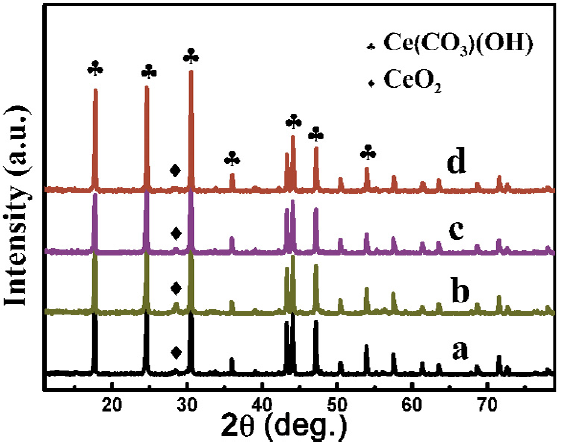
Fig. 1. XRD patterns of the as-synthesized samples prepared with different dosages of Ce(NO3)3⋅6H2O: (a) 2 mmol, (b) 4 mmol, (c) 6 mmol, (d) 8 mmol.

Fig. 2 shows the overall SEM images of the as-synthesized Ce(CO3)(OH) prepared with different dosages of Ce(NO3)3⋅6H2O. It can be seen that the size of Ce(CO3)(OH) particles decreases with the increase of Ce(NO3)3⋅6H2O from 2 to 8 mmol. The size distribution of the as-synthesized Ce(CO3)(OH) particles is uniform under all growth conditions. And the morphologies show little change as the concentration of Ce(NO3)3⋅6H2O increases.
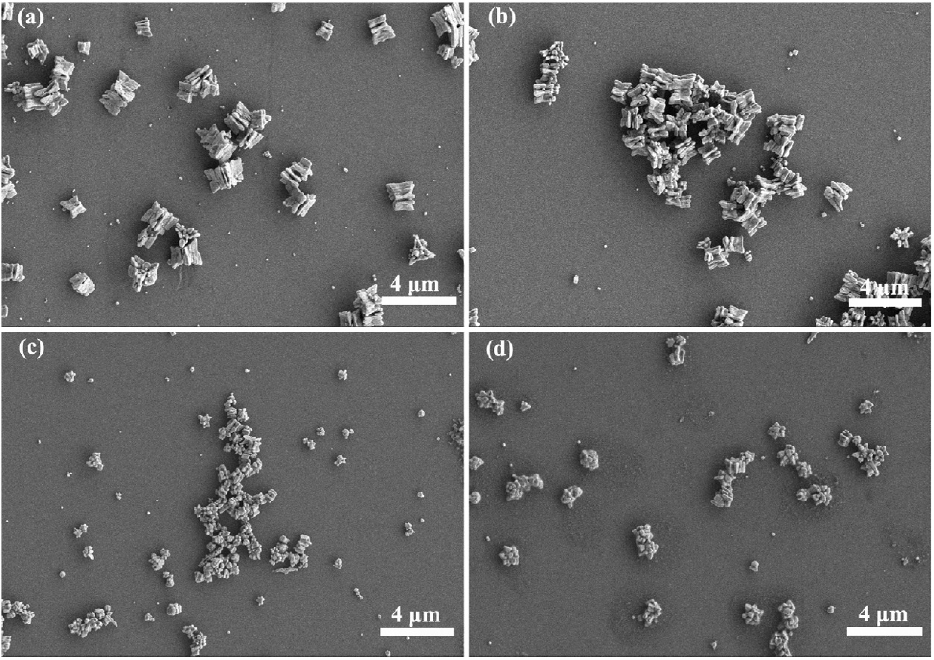
Fig. 2. Overall SEM images of as-synthesized Ce(CO3)(OH) prepared with different dosages of Ce(NO3)3⋅6H2O: (a) 2 mmol, (b) 4 mmol, (c) 6 mmol, (d) 8 mmol.

Fig. 3 shows the high-magnification SEM images of as-synthesized Ce(CO3)(OH) prepared with different dosages of Ce(NO3)3⋅6H2O. With increasing the dosages of Ce(NO3)3⋅6H2O, an obvious morphology change in Ce(CO3)(OH) from triangle gear to hexagon gear is observed. It indicates that Ce(NO3)3⋅6H2O plays an important role in controlling the morphology and size of the particles. Fig. 3 also indicates that these gear-shape microstructures are made up of nanosheets of different sizes. For example, the average size of the nanosheets shown in Fig. 3 is about 600 nm in length, 400 nm in width, and 50 nm in thickness.
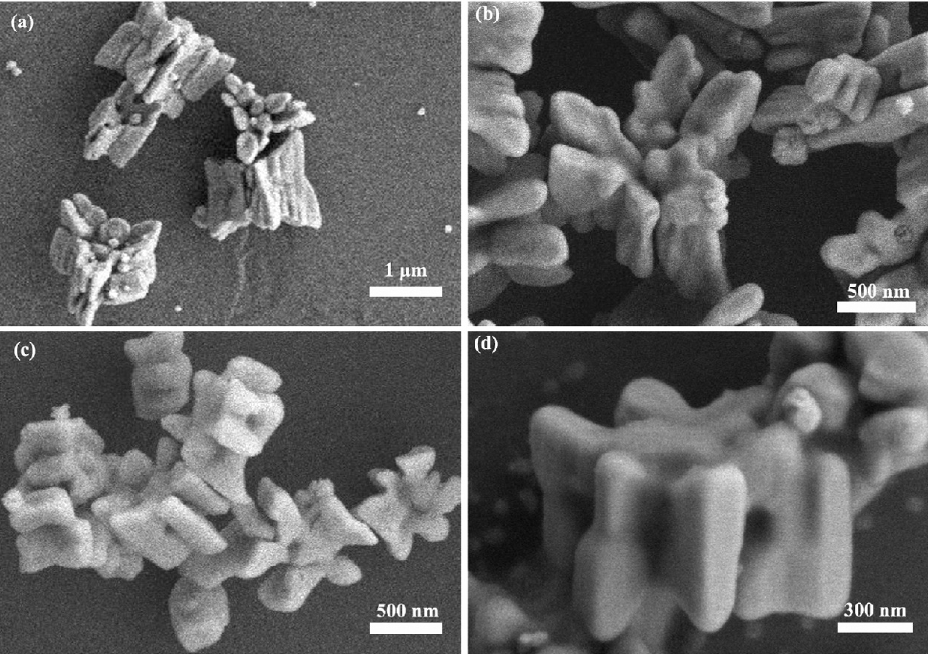
Fig. 3. High-magnification SEM images of as-synthesized Ce(CO3)(OH) prepared with different dosages of Ce(NO3)3⋅6H2O: (a) 2 mmol, (b) 4 mmol, (c) 6 mmol, (d) 8 mmol.

The thermal stability of the as-synthesized sample prepared with 4 mmol Ce(NO3)3⋅6H2O was investigated by thermogravimetric/differential thermal analysis (TG/DTA) analysis as shown in Fig. 4. The TG curve (curve a) shows 0.5% weight loss up to 280 °C, which conforms that very little water remains in the sample after dry. A major weight loss happens rapidly in the range of 280-340 °C. After that, it nearly keeps constant as the temperature continues to increase, which is ascribed to the loss of CO2 and H2O from the carbonaceous, surfactant-based material trapped within the sample. The total weight loss from room temperature to 460 °C is about 19.2%, which is consistent with theoretical value 23% calculated from reaction (1).

4Ce(CO3)(OH)+O2→4CeO2+4CO2+2H2 (1)

Fig. 4. TG/DTA curves of as-synthesized gear-shape sample prepared with Ce(NO3)3⋅6H2O of 4 mmol.

The DTA curve (curve b) shows that an endothermic peak is observed to have maxima at about 313 °C. This sharp and strong endothermic peak confirms the thermal decomposition of Ce(CO3)(OH), which is well corresponding to that of the rapid weight loss in the TG curve. This conclusion is corroborated by XRD studies which show the appearance of Ce(CO3)(OH). It suggests that an endothermic reaction involving the thermal decomposition of Ce(CO3)(OH) to CeO2 occurs by the post-heat-process. Based on the TG-DTA curves, it is reasonable that the calcination temperature for Ce(CO3)(OH) precursors was chosen at 400 °C.

Fig. 5 shows the XRD patterns for those annealed gear-shape samples. All diffraction peaks in these patterns can be perfectly indexed to the face-centered cubic structure with space group Fm-3m (JCPDS Card #34-0394). From each of these XRD patterns, it can be seen that no secondary phase is observed, indicating that pure CeO2 are synthesized by the hydrothermal method with different concentrations of Ce(NO3)3⋅6H2O. It can be clearly seen that the diffraction peaks become sharper and narrower with increasing dosages of Ce(NO3)3⋅6H2O, which indicates that the crystal size of CeO2 becomes bigger and the crystallinity becomes better defined. The average crystallite size and lattice strain of all the samples are calculated by Scherer's equation and Hall method, respectively. The average crystallite size and lattice strain values are 10.8 nm, 11.6 nm, 13.2 nm, 13.6 nm, and 1.082%, 0.994%, 0.838%, 0.803%, respectively, for the CeO2 samples prepared with Ce(NO3)3⋅6H2O of 2 mmol, 4 mmol, 6 mmol, and 8 mmol. It is observed that the lattice strain decreases with increasing crystallite size. This decrease is possibly due to the introduction of Ce3+ ions into the crystal lattice. Ce3+ ions have a higher ionic radius (0.1304 nm) compared with the Ce4+ ions (0.092 nm) and introduce oxygen vacancies. Therefore, with the increase of the concentration of Ce3+ ions, and there is also an increase in the number of oxygen vacancies. In addition, the high Ce(NO3)3⋅6H2O concentration would facilitate fast nucleation and the formation of a large number of nuclei, which would affect the balance between the chemical potential and the rate of ionic motion in the precursor solution. It will result in more uniform and bigger CeO2 structures[31]. The lattice parameters calculated from XRD pattern are about 0.5420 nm, 0.5418 nm, 0.5415 nm, 0.5412 nm, for the CeO2 samples prepared with Ce(NO3)3⋅6H2O of 2 mmol, 4 mmol, 6 mmol, and 8 mmol, respectively, which are little larger than that of bulk CeO2 (0.5411 nm). The lattice parameter decreases from 0.5420 to 0.5412 nm with the increase of Ce(NO3)3⋅6H2O from 2 to 8 mmol. This can be contributed to the lattice expansion effect resulting from oxygen vacancy and Ce3+ ions [32,33,34].

Fig. 5. XRD patterns of annealing gear-shape samples prepared with different dosages of Ce(NO3)3⋅6H2O: (a) 2 mmol, (b) 4 mmol, (c) 6 mmol, (d) 8 mmol.

Fig. 6 shows SEM images of the annealed gear-shape samples. The post-heat-treatment process does not ruin the morphology of the products, and the CeO2 microstructures almost keep the same morphology as its counterpart.
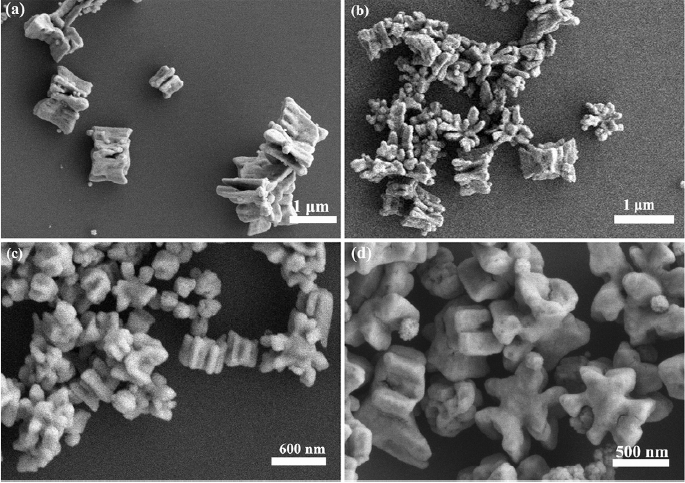
Fig. 6. SEM images of annealing gear-shape samples prepared with different dosages of Ce(NO3)3⋅6H2O: (a) 2 mmol, (b) 4 mmol, (c) 6 mmol, (d) 8 mmol.

Fig. 7 schematically illustrates the morphology-selective formation mechanism of Ce(CO3)(OH) gear-shape microstructures. At the very beginning, ammonium hydrogen carbonate (NH4HCO3) provides ammonium (NH+4), hydroxyl (OH-OH-), and carbonate anions (CO2-3), and the Ce(CO3)(OH) nanocrystals with irregular shapes are formed. The main reactions in the system can be expressed as follows (reactions (2)-(5)):

NH4HCO3+H2O→NH3⋅H2O+H2CO3 (2)

NH3⋅H2O⇌NH+4+OH- (3)

H2CO3⇌2H++CO2-3 (4)

Ce3++OH-+CO2-3→Ce(CO3)(OH) (5)
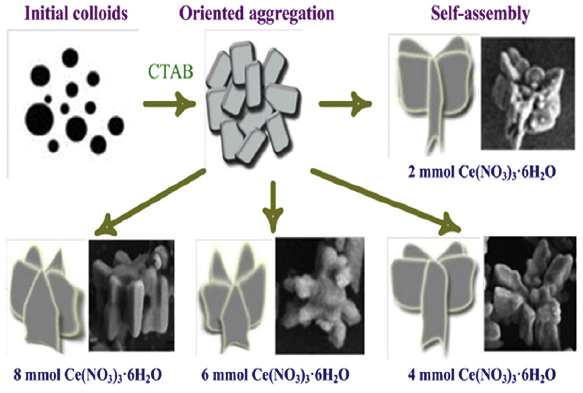
Fig. 7. Schematic illustration of the formation process of Ce(CO3)(OH) microstructures with different morphologies.

While the reaction is carried out without the aid of any surfactant, the as-synthesized particles tend to share common faces in order to maximize the packing density[35]. In the presence of CTAB, CTAB molecules would be selectively adsorbed on certain facets, resulting in the changes of the growth rate of different crystal faces and the formation of nanosheets. In addition, as mentioned above, increasing dosages of Ce(NO3)3⋅6H2O could increase the rate of nucleation of Ce(CO3)(OH). At the same time, the concentration of nanosheets would increase and the size would decrease. So the different morphologies are formed just like being assembled under the function of CTAB micelles. And CeO2 microstructures are produced by thermal decomposition of Ce(CO3)(OH) as reaction (1).

3.2. Composition and chemical state

To investigate oxidation state of Ce in the obtained CeO2 microstructures, XPS analyses were carried out. Fig. 8(a) shows XPS Ce 3d core levels spectra of CeO2 sample prepared with 4 mmol Ce(NO3)3⋅6H2O. As we all know that there are two different oxidation states for elemental Ce, namely, Ce(III) and Ce(IV). However, Ce(IV) is more stable than Ce(III) in the presence of air. As shown in Fig. 8(a), there are 8 deconvolved Gaussian-peak assignments in the spectra, where peaks labeled as U″′ (916.35 eV), U″ (906.96 eV), U (900.50 eV) and V″′ (897.98 eV), V′ (888.45 eV), V (881.99 eV) refer to 3d3/2 and 3d5/2, respectively, and are characteristic of Ce4+ 3d final states; while U′ (902.82 eV) and V′ (884.05 eV) refer to 3d3/2 and 3d5/2, respectively, and are from Ce3+ final states [32,36]. It is clear that cerium exists mainly as Ce(IV) in the sample, but a small quantity of Ce(III) is also detected. This result implies the existence of defects and the peak intensity reflects the concentration of oxygen vacancies. The ratio between fitted peak areas of Ce4+ and Ce3+ for ceria can be used to estimate their concentrations. They can be calculated as:

$$[Ce^{3+}]=\frac{A_u^{’}+A_v^{’}}{A_u^{’’’}+ A_u^{’’}+ A_u^{’}+ A_u+ A_v^{’’’}+ A_v^{’’}+ A_v^{’}+A_v} \ \ (6)$$

$$[Ce^{4+}]=\frac{ A_u^{’’’}+ A_u^{’’}+ A_u^{’}+ A_v^{’’’}+ A_v^{’’}+ +A_v }{A_u^{’’’}+ A_u^{’’}+ A_u^{’}+ A_u+ A_v^{’’’}+ A_v^{’’}+ A_v^{’}+A_v} \ \ (7)$$

where Ai is the integrated area of peak “i”.
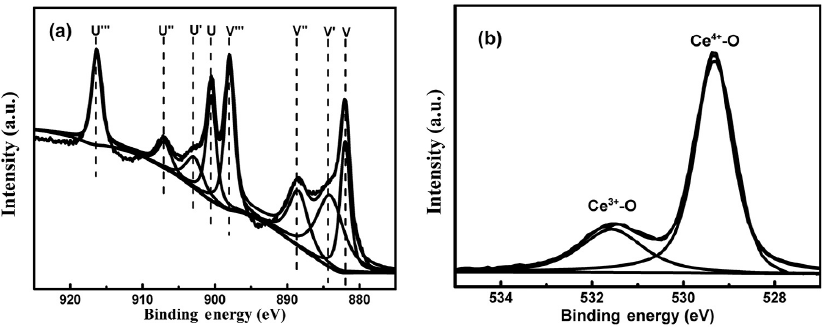
Fig. 8. XPS of Ce3d (a) and O1s (b) core levels spectra of gear-shape CeO2 samples prepared with Ce(NO3)3⋅6H2O of 4 mmol.

Table 1 shows the integrated area of Ce3d and O1s. According to Eqs. (6) and (7), it can be calculated that the concentration of Ce3+ for sample prepared with 4 mmol Ce(NO3)3⋅6H2O is 27.83%. The trivalent Ce3+ ions can be distributed either in region of sesquioxide Ce2O3 or around oxygen vacancies in CeO2. In order to determine whether the trivalent Ce3+ ions are associated with Ce2O3 or oxygen vacancies, we can calculate the oxygen content, which is the sum of the required oxygen to fully oxidize Ce4+ and Ce3+ to form CeO2 and Ce2O3, respectively. By taking into account the difference in stoichiometry x = [O]/[Ce] in CeO2 (x = 2) and in Ce2O3 (x = 1.5), the ratio of O to the total Ce ions (Ce4+ + Ce3+) is determined from the concentration of [Ce4+] and [Ce3+] according to Eq. (8).

$$x=\frac{[o]}{[Ce]}=\frac{3}{2}\times[Ce^{3+}]+2\times[Ce^{4+}] \ \ (8) $$


Table 1. Integrated areas of individual XPS peaks of the Ce 3d and O 1s from gear-shape CeO2 sample prepared with Ce(NO3)3⋅6H2O of 4 mmol
Ce 3d3/2
----------------------
Ce 3d5/2
----------------
O 1s
--------------
u″′ u″ u′ u v″′ v″ v′ v Ce4+-O Ce3+-O
49,391.83 19,757.96 30,474.33 57,303.20 80,149.97 61,001.08 100,853.50 72,896.72 60,263.86 20,349.76

Table 1. Integrated areas of individual XPS peaks of the Ce 3d and O 1s from gear-shape CeO2 sample prepared with Ce(NO3)3⋅6H2O of 4 mmol

Fig. 8(b) shows XPS O1s core levels spectra of CeO2 sample prepared with 4 mmol Ce(NO3)3⋅6H2O. It can be seen that the O1s spectrum consists of two peaks at binding energy 531.57 and 529.33 eV, respectively. The peak at binding energy 531.57 eV can be attributed to lattice oxygen ions in Ce2O3, the peak at 529.33 eV originates from lattice oxygen ions in CeO2 [37,38], and O relates to the Ce3+ ions (Ce3+-hydroxide and Ce3+-oxide)[39]. The actual stoichiometry x′ = [O]/[Ce] can be calculated directly from the XPS integrated areas of the O1s and Ce3d peaks according to Eq. (9),

$$x^{’}=\frac{O_{lS}}{Ce_{sd}}=\frac{A_o}{A_{Ce}}\times \times \frac{S_{Ce}}{S_o}\ \ (9)$$

where AO and ACe are the XPS integrated areas of the O1s and Ce3d peaks, and SCe (=7.399) and SO (=0.711) are sensitivity factors of Ce and O atoms, respectively.

Table 2 shows the stoichiometry variations with the concentration of Ce3+ (requiring O to fully oxidize Ce3+ and Ce4+ and direct comparison of the O 1s and Ce 3d XPS peak intensities). From Table 2, it can be seen that the stoichiometric ratio of oxygen and cerium (x′ = [O1s]/[Ce3d]) is 0.08 smaller than the stoichiometric ratio given by Eq. (8), which indicates that the part of Ce3+ in the sample is consumed in forming Ce2O3, and part of Ce3+ is forming oxygen vacancies. This result suggests that Ce2O3 and oxygen vacancies coexist in the gear-shape CeO2 sample.


Table 2. Concentrations of Ce3+ and Ce4+ ions and stoichiometry x = [O]/[Ce] of gear-shape CeO2 sample prepared with Ce(NO3)3⋅6H2O of 4 mmol
[Ce3+] [Ce4+] x = [O]/[Ce]a x′ = [O1s]/[Ce3d]b
27.83% 72.17% 1.86 1.78

aUsing Eq. (8).

bUsing Eq. (9).

Table 2. Concentrations of Ce3+ and Ce4+ ions and stoichiometry x = [O]/[Ce] of gear-shape CeO2 sample prepared with Ce(NO3)3⋅6H2O of 4 mmol

The Ce3+ ions and oxygen vacancies exist in CeO2 sample as proven by XPS, while XRD identified only CeO2 phase. Therefore, the Ce2O3 phase is likely amorphous and cannot be seen in XRD. The amorphous character of Ce2O3 is an indication that this phase is located at the grain surface and at the grain boundaries[5,40].

3.3. Optical properties

Raman spectroscopy is a very important characterization tool to investigate the change in the local structure. In order to better understand the gear-shape CeO2 structure, Raman scattering of the samples prepared under different conditions was carried out and is shown in Fig. 9. One strong Raman peak centered at about 464 cm-1 dominates the spectra from all the samples. This peak is related to the F2g mode of CeO2 cube structure [6,41,42], which corresponds to symmetric breathing mode of the oxygen ions around each Ce4+ cation [18,27]. Therefore, it should be very sensitive to any disorder in oxygen sub-lattice due to thermal, doping, and grain-size induced effects[43]. The reduction of the phonon lifetime in the nanocrystalline regime affects the Raman characteristics of CeO2 as reflected by the line broadening and the increase in its asymmetry[44]. The Raman line broadening of CeO2 nanostructures can be described by the dependence of the half-width (Γ) on the inverse of grain size (dg), which follows a linear behavior as Eq. (10).

Γ(cm-1)=10+124.7/dg (10)

Fig. 9. Room temperature Raman spectra of gear-shape CeO2 samples prepared with different dosages of Ce(NO3)3⋅6H2O: (a) 2 mmol, (b) 4 mmol, (c) 6 mmol, (d) 8 mmol.

As shown in Fig. 9, the strong peaks become sharper and narrower with increasing dosages of Ce(NO3)3⋅6H2O, indicating that the crystal size of CeO2 (dg) becomes larger and crystallinity becomes better. The grain sizes calculated by Eq. (10) are 8.9 nm, 9.6 nm, 10.4 nm, and 10.8 nm for the CeO2 samples prepared with Ce(NO3)3⋅6H2O of 2 mmol, 4 mmol, 6 mmol, and 8 mmol, respectively. This result is near that obtained from the XRD measurements. The Raman peaks positions are 462.12, 464.23, 463.22, 463.22 cm-1 for samples a, b, c, d, respectively. Several factors may cause the changes in the main Raman peak position, including phonon confinement, size distribution, defects, and variations in relaxation with particle size[42]. It is likely that Ce3+ ions in these samples are responsible for the changes in the Raman scattering as supported by the XRD and XPS data.

The second-order features at 1170 cm-1 are very prominent for all samples, which can be attributed to the second-order Raman mode of surface superoxide species (O-2), and has little additional contributions from F2g symmetry [41,42]. In addition, the peak at 570 cm-1 can be attributed to the presence of Ce3+[6], and the peak near 260 cm-1 can be contributed to disorder in the system [27,43].

The UV-vis absorption spectra of the CeO2 samples are shown in Fig. 10. All the samples exhibit strong absorption bands in the UV region. However, a noticeable red-shift of the absorption edge is observed as the dosages of Ce(NO3)3⋅6H2O increase from 2 to 8 mmol. The direct Eg of the CeO2 nanostructures is determined by fitting the absorption data according to the direct transition equation [14,45]:

αhν=ED (hν-Eg)1/2αhν=ED (-Eg)1/2 (11)

where α is the absorption coefficient, the photon energy, Eg the direct band gap, and ED is a constant. The Tauc plots of (αhν)2 versus are given in Fig. 10. The extrapolation of linear portion of the curves toward absorption equal to zero gives Eg for direct transition. Eg deduced from the Tauc plots are 3.71, 3.70, 3.68, and 3.57 eV for CeO2 samples prepared with Ce(NO3)3⋅6H2O of 2, 4, 6, and 8 mmol, respectively. All these values are larger than that of bulk CeO2 (3.19 eV)[46]. The red-shift of the band edge absorption of the CeO2 nanostructures has been observed by other researchers. However, the simon-pure mechanism of the red-shift is still lack of a unified viewpoint. As is well-known that the optical Eg is blue-shifted with the reduction of particles size because of the quantum confinement effect, which can be ruled out when the size up to 10 nm. Therefore, the shape effect has been used to explain for the red-shift of the optical Eg of CeO2 nanostructures. Chen et al. [47,48] observed a red-shift phenomenon for the CeO2 nanoneedles and nanoparticles, which is attributed to the shape effect. Some other scholars consider that Ce3+ ions coexist with Ce4+ ones at outermost nanocrystals surface[16] and the deficiency would arise from the charge transmission between Ce3+ and Ce4+ ions, which is generally accepted for the explanation of the red-shift of CeO2 films. Patasalas et al.[40] reported that the red-shift of optical Eg was correlated with the concentration of Ce3+ ions, and the increase of Ce3+ concentration caused the decrease of optical Eg of CeO2 film. In addition the localized states of Eg resulting from the deficiency tend to increase the concentration of Ce3+, leading to a red-shift[23]. The existence of Ce3+ at the grain surface was also proven the reason of red-shift. Based on the aforementioned discussion, it is rationally concluded that the red-shift of optical Eg of CeO2 is attributed to the shape effect, concentration of Ce3+ ions, and oxygen vacancies.

Fig. 10. UV-Vis absorption spectra and insets plots of (ahv)2 as function of energy of the CeO2 samples prepared with different dosages of Ce(NO3)3⋅6H2O: (a) 2 mmol, (b) 4 mmol, (c) 6 mmol, (d) 8 mmol.

3.4. Ferromagnetism analysis

Fig. 11 shows magnetic hysteresis loops of CeO2 samples prepared with different dosages of Ce(NO3)3⋅6H2O at room temperature. The curve exhibits very nice magnetic hysteresis with a lower coercivity, but the curve behaves like paramagnetic at higher field. Room temperature ferromagetism (RTFM) has been observed for the gear-shape CeO2 samples. Table 3 shows the parameters of Ms, residual magnetization (Mr), coercivity (Hc), lattice parameter, Eg, and Ce3+ concentration for CeO2 samples with different dosages of Ce(NO3)3⋅6H2O. From Table 3, it can be seen that the all values of CeO2 samples constantly decrease as the dosages of Ce(NO3)3⋅6H2O increase except Hc value. According to the above analysis, we know that the lattice constant and Eg is closely related to the Ce3+ irons concentration, which will decrease with the loss of the Ce3+ concentration. As we know, the bulk CeO2 is paramagnetic, its electron orbits are symmetrical and the spins are also coupled. From the above analysis, there are a small number of Ce3+ ions at the surface of CeO2 samples. While Ce3+ ions exist in the surface, the electron orbits (Ce4+-O2--Ce3+) are no longer symmetrical and uncoupled spins in the Ce f orbits are generated. Therefore, the room temperature ferromagnetic (RTFM) might consequently arise from a nearest-neighbor interaction: double exchange (Ce4+-O2--Ce3+). From Table 3, we can see that the Ms value increases slowly with the increase of Ce3+ ions concentration. There is no unified view on the origin of magnetism in CeO2. Some people think that the oxygen vacancies on the surface of the CeO2 nanoparticles resulted in the generation of ferromagnetic. The other people think that the magnetic properties of CeO2 nanoparticles were the result of the interaction between Ce3+ and oxygen vacancies. According to the magnetic principle, we believe that the magnetic properties of CeO2 can be due to the special electronic structures, which are aroused by the Ce3+ ions in deposits. And in a certain range with the increase of the concentration of Ce3+ ions the ferromagnetism will increase. The relationship between oxygen vacancies and CeO2 nanoparticles is in need for further investigations.
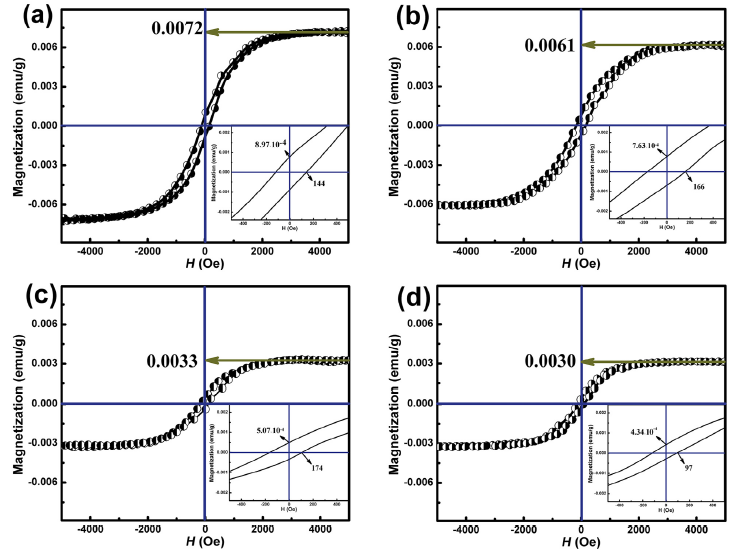
Fig. 11. Magnetic hysteresis loops of CeO2 samples prepared with different dosages of Ce(NO3)3⋅6H2O: (a) 2 mmol, (b) 4 mmol, (c) 6 mmol, (d) 8 mmol.


Table 3. Parameters of Ms, Mr, Hc, lattice parameter, Eg and Ce3+ concentration for CeO2 samples with different dosages of Ce(NO3)3⋅6H2O
Dosages of Ce(NO3)3⋅6H2O (mmol) Ms (×10-3 emu/g) Mr (×10-4 emu/g) Hc (Oe) Lattice parameter (nm) Eg (eV) Ce3+ concentration (%)
2 7.2 8.97 144 0.5420 3.72
4 6.1 7.63 166 0.5418 3.70 27.83
6 3.3 5.07 174 0.5415 3.69
8 3.0 4.34 97 0.5412 3.57 24.53
Bulk CeO2 0 0 0 0.5411 3.19 0

Table 3. Parameters of Ms, Mr, Hc, lattice parameter, Eg and Ce3+ concentration for CeO2 samples with different dosages of Ce(NO3)3⋅6H2O

4. Conclusion

In summary, the gear-shape CeO2 microstructures were synthesized via a facile hydrothermal method. The dosages of Ce(NO3)3⋅6H2O play a key role in the morphology of the as-prepared Ce(CO3)(OH) and therefore the properties of the final product CeO2. The XRD indicated that the synthesized CeO2 samples have a fluorite structure. The Eg of CeO2 nanostructures is larger than that of bulk materials. They also increases with the increase of dosages of Ce(NO3)3⋅6H2O during sample growth. Ce3+ and oxygen vacancies at surface of CeO2 samples were found to increase at higher dosages of Ce(NO3)3⋅6H2O. All the synthesized CeO2 samples exhibited RTFM. The relationship of RTFM with lattice parameter, Eg, oxygen vacancies, and concentration of Ce3+ was discussed. The Ms of the synthesized gear-shape CeO2 is significantly affected by the lattice parameter and the Eg, which can be due to the special electronic structures, which are aroused by the Ce3+ ions in deposits.

Acknowledgment:This work was financially supported by the Anhui Provincial Natural Science Foundation (No. 1508085SME219).

The authors have declared that no competing interests exist.

References

[1] C.T. Campbell, C.H. Peden, Science 309 (2005) 713-714.
[Cited within:2]
[2] J. Hu, T.W. Odom, C.M. Lieber, Acc. Chem. Res. 32(1999) 435-445.
[Cited within:3]
[3] M.G. Sujana, K.K. Chattopadyay, S. Anand, Appl. Surf. Sci. 254(2008) 7405-7409.
[Cited within:1]
[4] M. Niwano, S. Sato, T. Koide, T. Shidara, A. Fujimori, H. Fukutani, S. Shin, M.Ishigame, J. Physical Soc. Japan 57 (1988) 1489-1496.
[Cited within:1]
[5] L.Wang, F. Meng, Mater. Res. Bull. 48(2013) 3492-3498.
[Cited within:3]
[6] H. Mai, L. Sun, Y. Zhang, C. Yan, J. Phys. Chem. 109(2005) 24380-24385.
[Cited within:3]
[7] J.Wei, Z. Yang, Y. Yang, CrystEng Comm 13 (2011) 2418-2424.
[Cited within:2]
[8] F. Lu, F. Meng, L.Wang, Y. Sang, J. Luo, Micro Nano Lett. 7(2012) 624-627.
[Cited within:1]
[9] M.Wu, Q. Zhang, Y. Liu, Q. Fang, X. Liu, Mater. Res. Bull. 44(2009) 1437-1440.
[Cited within:2]
[10] F. Meng, J. Gong, L.Z. Fan, H. Li, J. Yuan, Ceram. Int. 42(2016) 4700-4708.
[Cited within:1]
[11] M. Ozawa, H. Yuzuriha, M. Haneda, Catal. Commun. 30(2013) 32-35.
[Cited within:1]
[12] M.A. Newton, M.D. Michiel, A. Kubacka, A. Iglesias-Juez, M. Fernandsez-Garcia, Angew. Chem. Int. Ed. Engl. 51(2012) 2363-2367.
[Cited within:1]
[13] F. Esch, S. Fabris, L. Zhou, T. Montini, C. Africh, P. Fornasiero, G. Comelli, R. Rosei, Science 309(2005) 752-755.
[Cited within:1]
[14] S. Phoka, P. Laokul, E. Swatsitang, V. Promarak, S. Seraphin, S. Maensiri, Mater.Chem. Phys. 115(2009) 423-428.
[Cited within:2]
[15] S. Kaur, G. Pal Singh, P. Kaur, D.P. Singh, J. Lumin. 143(2013) 31-37.
[Cited within:1]
[16] S. Phokha, S. Pinitsoontorn, P. Chirawatkul, Y. Poo-arporn,S. Maensiri, Nanoscale Res. Lett. 7(2012) 425-437.
[Cited within:3]
[17] J. Bai, Z. Xu, Y. Zheng, H. Yin, Mater. Lett. 60(2006) 1287-1290.
[Cited within:1]
[18] C. Tiseanu, V.I. Parvulescu, M. Boutonnet, B. Cojocaru, P.A. Primus, C.M. Teodorescu, C. Solans, M. Sanchez Dominguez, Phys. Chem. Chem.Phys. 13(2011) 17135-17145.
[Cited within:2]
[19] P. Periyat, F. Laffir, S.A.M.Tofail, E. Magner, RSC Adv. 1(2011) 1794-1798.
[Cited within:1]
[20] S. Gnanam, V. Rajendran, J. Solgel Sci.Technol. 58(2011) 62-69.
[Cited within:1]
[21] R.J. Qi, Y.J. Zhu, G.F. Cheng, Y.H. Huang, Nanotechnology 16 (2005) 2502-2506.
[Cited within:1]
[22] L. Yin, Y. Wang, G. Pang, Y. Koltypin, A. Gedanken, J. Colloid Interface Sci. 246(2002) 78-84.
[Cited within:1]
[23] X.H. Lu, X. Huang, S.L. Xie, D.Z. Zheng, Z.Q. Liu, C.L. Liang, Y.X. Tong, Langmuir 26 (2010) 7569-7573.
[Cited within:2]
[24] G.R. Li, D.L. Qu, Y.X. Tong, J. Phys. Chem. C 113 (2009) 2704-2709.
[Cited within:1]
[25] D.M. Kempaiah, S. Yin, T. Sato, CrystEngComm 13 (2011) 741-746.
[Cited within:1]
[26] F. Lu, F. Meng, L.Wang, J. Luo, Y. Sang, Mater. Lett. 73(2012) 154-156.
[Cited within:1]
[27] F. Meng, L.Wang, Mater. Lett. 100(2013) 86-88.
[Cited within:3]
[28] K. Zhou, Z. Yang, S. Yang, Chem. Mater. 19(2007) 1215-1217.
[Cited within:1]
[29] C.R. Li, Q.T. Sun, N.P. Lu, B.Y. Chen, W.J. Dong, J. Cryst. Growth 343 (2012) 95-100.
[Cited within:1]
[30] C.W. Sun, J. Sun, G.L. Xiao, H.R. Zhang, X.P. Qiu, H. Li, L.Q. Chen, J. Phys. Chem.B 110 (2006) 13445-13452.
[Cited within:1]
[31] W. Shi, S. Song, H. Zhang, Chem. Soc. Rev. 42(2013) 5714-5743.
[Cited within:2]
[32] G.R. Li, D.L. Qu, X.L. Yu, Y.X. Tong, Langmuir 24 (2008) 4254-4259.
[Cited within:2]
[33] V.F. Solovyov, M. Gibert, T. Puig, X. Obradors, Appl. Phys. Lett. 97(2010)231904-231905.
[Cited within:1]
[34] R.K. Hailstone, A.G. Difrancesco, J.G. Leong, T.D. Allston, K.J. Reed, J. Phys. Chem.C 113 (2009) 15155-15159.
[Cited within:1]
[35] Z.L.Wang, X. Feng, J. Phys. Chem. B 107 (2003) 13563-13566.
[Cited within:1]
[36] S. Deshpande, S. Patil, S. Kuchibhatla, S. Seal, Appl. Phys. Lett. 87(2005)133111-133113.
[Cited within:1]
[37] R. Yu, L. Yan, P. Zheng, J. Chen, X. Xing, J. Phys. Chem. C 112 (2008) 19896-19900.
[Cited within:1]
[38] A.E.C.Palmqvist, M. Wirde,U. Gelius, M. Muhammed, Nanostruct. Mater. 11(1999) 995-1007.
[Cited within:1]
[39] A. Pfau, K.D. Schierbaum, Surf. Sci. 321(1994) 71-80.
[Cited within:1]
[40] P. Patsalas, S. Logothetidis, L. Sygellou, S. Kennou, Phys. Rev. B 68 (2003)35104-35116.
[Cited within:2]
[41] W.H.Weber, K.C. Bass, J.R. McBride, Phys. Rev. B 48 (1993) 178-185.
[Cited within:2]
[42] J. Spanier, R. Robinson, F. Zhang, S.W. Chan, I. Herman, Phys. Rev. B 64 (2001)245407.
[Cited within:3]
[43] I. Kosacki, V. Petrovsky, H.U. Anderson, P.J. Colomban,J. Am. Ceram.Soc. 85(2002) 2646-2650.
[Cited within:2]
[44] P. Parayanthal, F. Pollak, Phys. Rev. Lett. 52(1984) 1822-1825.
[Cited within:1]
[45] S. Tsunekawa, T. Fukuda, A. Kasuya, J. Appl. Phys. 87(2000) 1318-1320.
[Cited within:1]
[46] Z.Wang, Z. Quan, J. Lin, Inorg. Chem. 46(2007) 5237-5242.
[Cited within:1]
[47] H.I. Chen, H.Y. Chang, Solid State Commun. 133(2005) 593-598.
[Cited within:1]
[48] H.I. Chen, H.Y. Chang, Ceram. Int. 31(2005) 795-802.
[Cited within:1]
Downloaded    
RichHTML Viewed    
Abstract Viewed    

Share
Export

Related articles:
Key words
Ceria
Controlled synthesis
Ferromagnetism
Hydrothermal method
Nanomaterials

Authors
Fanming Meng
Zhenghua Fan
Cheng Zhang
Youdi Hu
Tao Guan
Aixia Li